





Getting employee offboarding right is non-negotiable for a fast-moving startup.
A clunky, disorganised exit process costs you more than time. It damages your employer brand, creates security risks, and leaves remaining team members feeling uneasy. A smooth, respectful offboarding process secures company assets, ensures knowledge is transferred, and treats people with dignity on their way out.
This is a practical, in-the-trenches employee offboarding checklist. We will cover everything from revoking IT access and managing knowledge transfer to handling final payroll and nurturing a positive alumni relationship. Each step is designed to be actionable, helping you build a process that is secure, efficient, and human.
To help streamline your offboarding process, exploring various resources for employee termination checklist templates can provide a solid foundation. These frameworks often highlight critical compliance and administrative tasks you might overlook. Our guide builds on this, focusing on the operational and cultural nuances essential for startups and scale-ups.
Use these 10 steps to build a system that protects your business while honouring the contributions of your departing team members. Let's get it done.
1. Access Revocation and IT Equipment Recovery
Systematically cutting off a departing employee's access to all company systems and recovering physical assets is a non-negotiable step. This process protects sensitive company and customer data, prevents security breaches, and ensures valuable equipment is returned and prepared for the next team member. Getting this wrong exposes your startup to significant security, compliance, and financial risks.
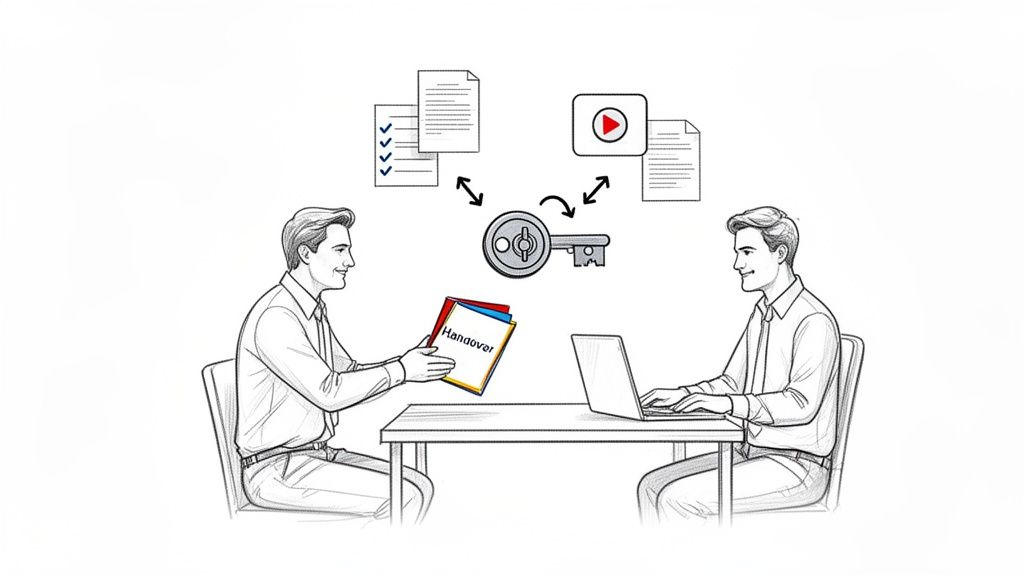
This foundational task requires tight coordination between People Ops, IT, and the employee's direct manager. It is about more than just collecting a laptop. It is about methodically closing every digital and physical door the employee had access to during their tenure.
Why It's Critical
For fast-moving scale-ups, this process is central to maintaining security and meeting compliance standards like SOC 2 and ISO 27001. A single forgotten account can become a backdoor for a malicious actor or a source of an accidental data leak. Proper equipment recovery also manages costs by preventing asset loss and preparing hardware for reuse.
How to Implement It
- Create a Master Access List: Before an offboarding event occurs, document every single tool, platform, and system an employee has access to. Categorise them by sensitivity. For example, core infrastructure, financial systems, project management tools.
- Automate Revocation: Use identity management platforms like Okta or Microsoft Entra ID to centralise and automate access removal. A single click should deactivate access to dozens of integrated applications simultaneously.
- Establish a 'Last Day' Timeline: Coordinate with IT to begin access revocation two hours before the employee's scheduled departure. This prevents last-minute data downloads while allowing them to complete final handover tasks.
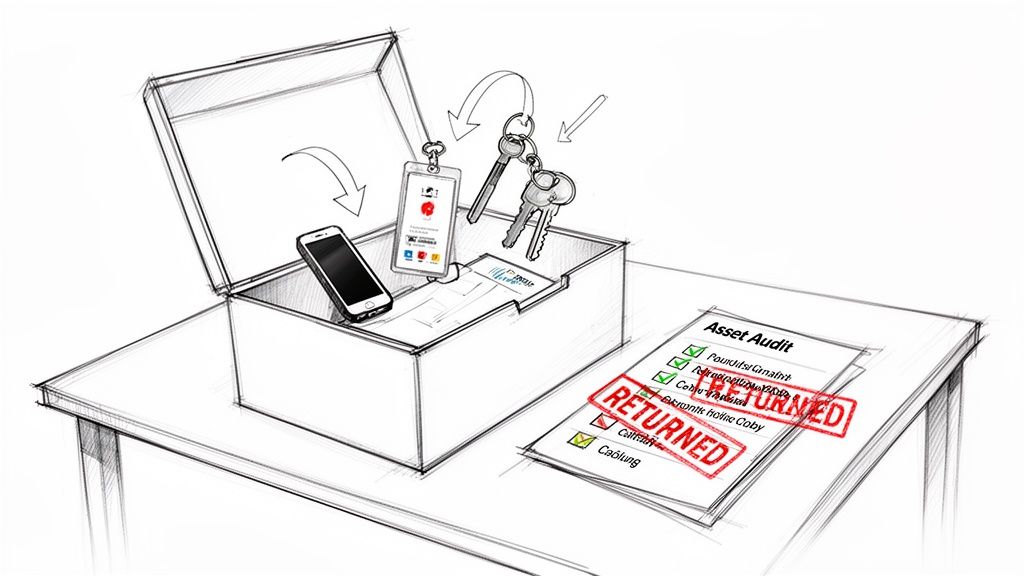
- Document Asset Returns: Use a simple checklist signed by both the employee and their manager or an IT representative to confirm the return of all assets. This includes their laptop, phone, security badges, and keys. When recovering devices, it is essential to follow protocols to safely wipe data from company iPhones before they are reassigned.
- Disable, Don't Delete (Initially): Configure systems to disable accounts for 30–90 days rather than deleting them immediately. This preserves data like email archives or cloud documents for handover and legal discovery if needed, without maintaining active access.
2. Knowledge Transfer and Documentation Handover
A departing employee takes more than just their laptop with them. They leave with a wealth of institutional knowledge covering processes, client relationships, and project nuances. A structured knowledge transfer ensures this critical intelligence remains within the company, preventing productivity gaps and preserving operational continuity. Neglecting this step forces their replacement or team to rediscover solutions to problems already solved.

This process is about systematically capturing and transferring everything the departing team member knows about their role. It transforms implicit, person-dependent knowledge into explicit, documented assets that benefit the entire organisation. For a scale-up, this is a core competency that underpins sustainable growth.
Why It's Critical
In a fast-growing startup, roles often evolve faster than documentation. When someone leaves, their undocumented workflows and key contacts can vanish, creating an immediate operational black hole. A thorough handover protects revenue by ensuring client relationships are managed smoothly and prevents project delays. Companies like GitLab and Zapier build this into their culture, recognising that documented knowledge is a scalable asset.
How to Implement It
- Start Early with a Structured Plan: Begin the knowledge transfer process at least two to three weeks before the employee's last day. Use a standardised template in Notion or a Google Doc to guide the documentation. Cover daily tasks, key contacts, project statuses, and system credentials.
- Assign a Knowledge Recipient: Designate a specific successor or team member to receive the handover. This individual should attend all transfer sessions to ask questions and ensure they fully understand the documented information.
- Record Video Walkthroughs: For complex software or multi-step processes, ask the departing employee to record short video tutorials using a tool like Loom. These visual guides are invaluable for training new starters and serve as a permanent resource.
- Create a 'State of the Role' Memo: The final piece of documentation should be a brief memo summarising current priorities, ongoing challenges, and recommended next steps for the role. This gives the successor immediate strategic context.
- Securely Transfer Credentials: Ensure all passwords and access keys are stored and transferred via a secure password manager like 1Password. This is a critical security step in any comprehensive employee offboarding checklist.
3. Final Paycheck, Benefits, and Financial Settlement
Handling the final financial settlement correctly is the last financial interaction an employee has with your company. A smooth, accurate, and transparent process reinforces trust and respect, even at the point of departure. This step involves calculating and delivering all final compensation, communicating benefits continuation, and settling any outstanding financial matters.
This process requires meticulous coordination between People Ops, finance, and the employee's manager. For a fast-growing startup, getting this wrong can lead to legal disputes, damage your employer brand, and create unnecessary administrative headaches. Getting it right ensures a clean, professional end to the employment relationship.
Why It's Critical
Timely and accurate final payments are mandated by law, with specific regulations varying by location. Failure to comply can result in significant penalties. Beyond compliance, a well-managed financial offboarding provides departing employees with clarity on crucial topics like health insurance and pension plans, reducing post-employment queries.
How to Implement It
- Create a Payroll Offboarding Checklist: Two weeks before the departure date, send a dedicated checklist to the finance team. This should trigger the calculation of accrued paid time off (PTO), outstanding commissions or bonuses, and any final salary prorations.
- Verify Regional PTO Payout Laws: Document your company's policy on paying out unused holiday time clearly in your employee handbook. Critically, ensure this policy complies with UK regulations which mandate payment for untaken statutory leave.
- Process Expenses Early: Request that the departing employee submits all outstanding expense reports at least one week before their last day. This separates the reimbursement process from the final paycheck, preventing delays and confusion.
- Provide a Detailed Settlement Statement: Accompany the final payment with a clear breakdown. This statement should itemise base salary, holiday pay, bonuses, and any deductions, leaving no room for ambiguity. Scale-ups like Stripe process final payments within 24 hours of departure and include these detailed breakdowns.
- Communicate Benefits and Equity: Send a separate, clear communication detailing health insurance continuation options, pension plan instructions, and the status of any stock options. Explain exercise windows and vesting cliffs clearly to prevent future misunderstandings.
4. Exit Interview, Feedback Collection, and Closure Conversation
A well-structured exit process is a powerful tool for organisational learning. It combines a data-driven exit interview to uncover systemic issues with a human-centric closure conversation. This dual approach transforms a simple departure into a critical feedback loop that can reduce future turnover and improve the employee experience.
This process, typically owned by People Ops in partnership with the direct manager, provides invaluable, unfiltered insights into your culture, management, and compensation strategy. It also ensures departing team members feel heard and respected, turning them into alumni who speak highly of your company.
Why It's Critical
For scale-ups, understanding the root causes of attrition is essential for retaining top talent. Analysing exit feedback helps leaders identify patterns, such as a manager who needs coaching or a compensation band that is no longer competitive. The closure conversation reinforces your company's values, which is a key part of building a strong feedback culture.
How to Implement It
- Standardise Your Questions: Use a consistent set of open-ended questions for all exit interviews to gather comparable data. Focus on key areas like management effectiveness, career growth opportunities, and the reality of the role versus its description.
- Offer Multiple Feedback Channels: Some employees are more candid in a face-to-face conversation, while others prefer the anonymity of a survey. Offer both options to maximise honest feedback. Tools like Culture Amp or even a simple Google Form can be used for surveys.
- Separate Feedback from Closure: The exit interview, conducted by People Ops or a neutral third party, should focus on gathering data. The closure conversation, led by the direct manager, should focus on appreciation, celebrating contributions, and wishing the employee well.
- Aggregate and Act on Data: Don't let feedback sit in a spreadsheet. Review exit data quarterly to spot trends. Present anonymised findings to the leadership team with specific, actionable recommendations for improvement.
- Train Managers on Closure Conversations: Equip managers to handle these final conversations effectively. The goal is not to debate or criticise but to express genuine gratitude and acknowledge the employee’s impact. This final interaction heavily influences an employee's lasting impression of your company.
5. Communication and Announcement to Team and Clients
Handling the announcement of a team member's departure is a delicate but crucial part of the employee offboarding checklist. A well-managed communication plan protects team morale, retains client trust, and ensures operational continuity. Failing to control the narrative can lead to disruptive rumours, client anxiety, and a sense of instability.
This process involves strategically informing the team, clients, and other stakeholders of the departure. It is about crafting a clear, positive, and forward-looking message that respects the departing employee while reassuring everyone that business will continue smoothly. This requires close coordination between People Ops, the direct manager, and often the departing team member.
Why It's Critical
For a growing startup, how you manage departures defines your culture. Transparent and respectful communication reinforces psychological safety and shows you value your people. For client-facing roles, a poorly handled announcement can directly lead to lost revenue as clients may feel abandoned or uncertain about their future with your company.
How to Implement It
- Agree on Timing and Messaging First: Before any announcement, the manager should agree on the messaging and timing with the departing employee. This collaboration prevents surprises and ensures the message is respectful and accurate. The internal announcement should always happen before any external communication.
- Announce Internally From the Manager: The direct manager, not People Ops, should announce the news to the immediate team. Keep the message brief and positive, focusing on the future. Include the employee’s last day, a thank you for their contributions, and a clear plan for who will cover their responsibilities.
- Notify Key Clients Promptly: For any client-facing role, the account manager or team lead should personally notify key clients. This communication should happen within 24 hours of the internal announcement and include a warm handover to the new point of contact. This proactive step prevents clients from hearing the news secondhand.
- Establish a Clear Transition Plan: Don't just announce the departure. Announce the plan. Clearly state who is taking over specific responsibilities, projects, or client accounts. This provides immediate clarity and minimises disruption. If appropriate, organise a handover meeting between the departing employee, the successor, and the client.
- Keep it Forward-Looking: The focus of all communication should be on continuity and the future. Avoid going into detail about why the person is leaving. A simple, professional line like, "Jane is moving on to a new opportunity, and we wish her all the best," is sufficient. For more guidance, check out this excellent internal comms blueprint for startups.
6. Compliance, Legal, and Reference Documentation
Navigating the legal and administrative details of a departure is a crucial part of a robust employee offboarding checklist. This step ensures all regulatory requirements are met, protects the company from future legal risks, and formalises the end of the employment relationship cleanly. It is a critical risk-management function for any fast-growing company.
Finalising compliance and legal documentation provides official closure. It confirms the return of company property, reinforces ongoing obligations like confidentiality, and establishes a clear, consistent process for handling future reference requests. Getting this right minimises ambiguity and protects both the departing employee and the business.
Why It's Critical
For scale-ups, meticulous legal offboarding is non-negotiable. It defends against potential wrongful dismissal claims, protects valuable intellectual property, and ensures you remain compliant with employment law. A clear, documented process demonstrates fairness and diligence, which is vital for maintaining your company’s reputation.
How to Implement It
- Standardise Your Departure Agreements: Work with legal counsel to develop template exit agreements tailored to different role types and jurisdictions. Platforms like Carta often provide useful templates for IP assignment and confidentiality clauses that can serve as a starting point.
- Reinforce Confidentiality and IP: Have every departing employee sign a final document that reminds them of their ongoing obligations regarding intellectual property and confidentiality. This serves as a powerful, timely refresher of the agreements they signed upon joining.
- Define Your Reference Policy: Create and communicate a clear, written policy on providing references. Specify who is authorised to give them, what information will be verified, and the approval process. This prevents inconsistent or unauthorised references.
- Document Everything with Signatures: Ensure the departing employee signs acknowledgements for the return of all company property and receipt of their final pay and benefits information. This documentation is your first line of defence against any future disputes.
- Communicate Restrictive Covenants: If non-compete or non-solicitation clauses apply, provide the employee with a written reminder of their specific restrictions. Clearly state the company's position on enforcement to avoid any misunderstanding.
7. Mental Health and Wellbeing Support
Supporting an employee's wellbeing during their departure is a defining aspect of a compassionate and modern offboarding process. This step involves providing emotional and psychological support during what can be a highly stressful transition. It acknowledges that all departures, whether voluntary or involuntary, are significant life events that require thoughtful handling.
This goes beyond administrative tasks to demonstrate genuine care for the individual. For startups, this approach strengthens your employer brand and shows remaining team members that the company values its people, even when they leave.
Why It's Critical
A supportive offboarding process directly impacts your reputation and the morale of your current team. Employees watch how their departing colleagues are treated. Showing compassion builds trust and psychological safety, while a cold, transactional exit can breed anxiety and disengagement. Providing resources like career coaching or outplacement services for involuntary departures is a strategic move that mitigates reputational risk.
How to Implement It
- Promote EAP Proactively: Ensure all employees are aware of your Employee Assistance Programme (EAP) from their first day, not just their last. Reference it again in exit communications as a confidential resource they can use during their transition period.
- Offer Career Transition Support: For all departing employees, consider offering practical support like career coaching sessions. For involuntary or senior-level exits, budget for professional outplacement services that provide resume writing, interview coaching, and job search assistance.
- Be Flexible in the Final Weeks: Where possible, allow for flexibility during an employee's notice period. This could include remote work options, adjusted hours, or allowing time off for job interviews, which reduces stress significantly.
- Train Managers for Compassionate Check-ins: Equip managers to handle exit conversations with empathy. They should check in regularly during the final weeks, not just about handover tasks, but to offer support and normalise conversations about the stress of job transitions.
- Build an Alumni Network: Consider creating a simple alumni community on a platform like Slack or LinkedIn. This provides a space for former employees to maintain connections and access peer support, reinforcing a long-term positive relationship.
8. Alumni Network and Relationship Management
Offboarding doesn't have to be a final goodbye. A modern employee offboarding checklist includes creating formal pathways to maintain positive, long-term relationships with departing team members. This strategic approach recognises that former employees can become valuable clients, brand advocates, or even return as highly effective 'boomerang' hires.
This process transforms a transactional departure into a relational transition. It builds a community of advocates who understand your culture and mission. Tech leaders like Stripe and Airbnb have demonstrated that a well-managed alumni network is a powerful asset for recruitment and brand building.
Why It's Critical
For scale-ups, building an alumni network is a powerful, low-cost talent and marketing strategy. Boomerang employees ramp up faster, have higher retention rates, and bring valuable external experience back into the business. A positive relationship with former staff also strengthens your employer brand, as they are likely to share their good experiences with their professional networks.
How to Implement It
- Start on Day One: Introduce the alumni concept during onboarding. Frame it as a lifelong connection, not an afterthought during an exit. This sets a positive tone from the beginning.
- Choose a Low-Friction Platform: Don't overcomplicate it. A private LinkedIn Alumni group or a dedicated Slack community is often enough to get started. The key is choosing a space your former employees already use.
- Provide Consistent Value: Send a quarterly alumni newsletter with company updates, exclusive job openings, and success stories from other members. This keeps the connection alive without being intrusive.
- Facilitate Reconnection: Organise occasional virtual or in-person events. This could be anything from a casual virtual coffee to an annual reunion, helping to strengthen community bonds.
- Formalise a 'Boomerang' Programme: Create a clear pathway for re-hiring former employees. Consider offering benefits like an accelerated interview process or acknowledging their prior tenure for benefits calculations.
- Incentivise Referrals: Treat your alumni as a primary source for talent. Actively encourage and reward them for referring great candidates from their new networks.
9. Role Transition and Team Restructuring Communication
A departure is more than an administrative task. It's a significant team event that reshuffles responsibilities and workloads. Properly managing role transitions and communicating the plan is essential for maintaining team morale and preventing burnout. This step turns a potential disruption into an opportunity for strategic reorganisation and team development.
This process involves a deliberate analysis of the departing employee's duties and a transparent plan for how those tasks will be covered. For high-growth companies, failing to manage this transition leads to overworked staff, dropped projects, and a general sense of chaos.
Why It's Critical
Without a clear transition plan, remaining team members are left to pick up the slack without direction, often leading to stress and resentment. A well-communicated plan provides clarity, sets realistic expectations, and reassures the team that leadership has a strategy. Companies like Zapier use departures as a chance to identify internal growth opportunities for another team member.
How to Implement It
- Conduct a 'Responsibility Audit': Before the employee leaves, map out every single one of their duties, both major and minor. Work with them to categorise tasks as critical (must be covered immediately) or discretionary (can be paused or eliminated).
- Look for Growth Opportunities: Instead of simply dividing tasks among senior members, identify junior colleagues who are ready for a stretch assignment. This is a powerful way to show you invest in your team's development.
- Communicate the Plan Transparently: Hold a team meeting to walk through the transition. Clearly state what the departing employee was responsible for, who will be taking on each key task, and how timelines or priorities might be adjusted.
- Adjust Workloads and Deadlines: Acknowledge that the team's capacity is temporarily reduced. Be realistic about what can be achieved and adjust project deadlines accordingly. Don't let your team burn out trying to cover every gap.
- Use It as a Redesign Moment: A departure is a natural point to reassess a role. Does it still make sense as is? Can some tasks be automated or eliminated? This process is a key part of your wider succession planning strategy and ensures the team is structured for future success.
10. Return of Company Property and Equipment Audit
Systematically collecting all company-owned physical assets is a critical financial and security checkpoint in your employee offboarding checklist. This process involves recovering every item issued, from laptops and phones to security badges and keys, and auditing them against a central inventory. It protects your startup from asset loss, secures proprietary information, and ensures financial accountability.
This task is a fundamental asset management practice that prevents financial leakage and closes potential security gaps left by unreturned devices. Getting this right requires clear documentation from onboarding through to the final day.
Why It's Critical
For a scale-up, every laptop and monitor represents a significant cost. A robust audit process prevents valuable equipment from disappearing, directly impacting your bottom line. More importantly, unreturned devices containing company data are a major security risk. A formal recovery and audit process is essential for maintaining control over your assets and protecting sensitive information.
How to Implement It
- Maintain a Master Asset Inventory: Use your HRIS (like BambooHR or Rippling) or an IT management system to track every asset assigned to an employee from day one. Document serial numbers, device types, and issue dates.
- Send Proactive Return Reminders: A week before the employee's last day, send a clear email listing all the items they need to return, such as their laptop, charger, phone, and security pass.
- Create a Role-Specific Return Checklist: The equipment needed by a software engineer will differ from that of a marketer. Align the return checklist with the assets documented during their onboarding.
- Conduct In-Person Verification: If possible, have the employee's manager or an IT team member collect the items in person. Verify that everything is present and check the condition of high-value equipment before the employee signs off on the return form.
- Offer a Remote Return Option: For remote employees, provide a simple 'return kit' with a prepaid, insured shipping label and secure packaging, as popularised by companies like GitHub.
- Follow Up Promptly: If any items are missing after the departure date, follow up within 48 hours. You should not withhold a final payslip for unreturned property due to legal risks, but you can pursue recovery separately.
10-Item Employee Offboarding Checklist Comparison
Here is a quick-glance comparison of the 10 core offboarding items.
Access Revocation and IT Equipment Recovery.
Complexity: Medium–High.
Resources: IT/Security time, identity mgmt tools, asset tracking.
Outcome: Closed accounts, reduced insider risk, audit trail.
Advantage: Prevents breaches, ensures asset return, compliance records.Knowledge Transfer and Documentation Handover.
Complexity: Medium.
Resources: Departing employee time, documentation platforms.
Outcome: Continuity, faster replacement ramp, preserved institutional memory.
Advantage: Minimizes disruption, reduces key-person risk.Final Paycheck, Benefits, and Financial Settlement.
Complexity: Medium.
Resources: Payroll/Finance, HR systems, legal guidance.
Outcome: Accurate final compensation, legal compliance, clear settlement.
Advantage: Reduces disputes, protects employer brand, ensures compliance.Exit Interview, Feedback Collection, and Closure Conversation.
Complexity: Low–Medium.
Resources: People Ops time, survey tools.
Outcome: Actionable feedback, retention insights, emotional closure.
Advantage: Reveals systemic issues, improves retention, affirms contributions.Communication and Announcement to Team and Clients.
Complexity: Low–Medium.
Resources: Manager/comms time, templates, approvals.
Outcome: Reduced rumors, maintained client confidence, smooth handoffs.
Advantage: Preserves morale, protects client relationships.Compliance, Legal, and Reference Documentation.
Complexity: High.
Resources: Legal counsel, People Ops, secure document storage.
Outcome: Mitigated legal risk, clear records, enforceable obligations.
Advantage: Protects IP, standardizes references, reduces liability.Mental Health and Wellbeing Support.
Complexity: Low–Medium.
Resources: EAPs, coaching/outplacement budget, manager time.
Outcome: Lower stress, better departing experience, sustained goodwill.
Advantage: Demonstrates care, preserves reputation, supports morale.Alumni Network and Relationship Management.
Complexity: Low–Medium.
Resources: Community platform, comms, events budget.
Outcome: Ongoing relationships, referral and rehiring pipeline.
Advantage: Generates referrals, enables boomerang hires, brand ambassadors.Role Transition and Team Restructuring Communication.
Complexity: Medium.
Resources: Manager time, org design input.
Outcome: Clear duties, reduced disruption, identified skill gaps.
Advantage: Prevents burnout, creates development opportunities.Return of Company Property and Equipment Audit.
Complexity: Medium.
Resources: IT/Logistics, asset inventory system, return kits.
Outcome: Recovered assets, secure data disposal, accurate inventories.
Advantage: Protects assets, ensures data security, enables reuse.
Turn Your Checklist Into a System
A comprehensive employee offboarding checklist is the foundation of a repeatable system that safeguards your startup, respects the departing individual, and reinforces your company culture. Treating it as a mere administrative burden is a missed opportunity. Instead, view it as the final, critical touchpoint in the employee lifecycle.
Moving from a reactive, ad-hoc process to a structured offboarding system is what separates good People Operations from great People Operations. The checklist detailed in this article provides the blueprint. The goal is to transform this checklist into a seamless, automated, and human-centric workflow.
From Checklist to Strategic System
The true value of a robust employee offboarding checklist emerges when it becomes an ingrained system. This means moving beyond simply having a document and into operationalising every step with clear ownership and timelines.
Assign Clear Owners: Every item needs a directly responsible individual (DRI). The manager owns the knowledge transfer plan. IT owns asset recovery and access control. People Ops owns the exit interview and final payroll coordination. Ambiguity is the enemy of a smooth offboarding.
Automate Ruthlessly: Your HRIS should be the engine of your offboarding process. Use it to trigger workflows, send reminders, and track progress. Manual tracking with spreadsheets introduces unnecessary risk and administrative drag. Automate communication templates, task assignments, and compliance checks wherever possible.
Integrate Feedback Loops: The exit interview is not just a final conversation. The insights you collect should feed directly back into your People strategy. Are multiple people citing the same manager? Is there a recurring issue with a specific team's workload? Use this data to make tangible improvements.
The Lasting Impact of a Dignified Exit
The way you handle an employee's departure echoes far beyond their last day. It sends a powerful signal to your remaining team about how you value people. A clumsy, disorganised, or cold offboarding process creates anxiety and erodes trust. It tells your current employees that their contributions are only valued as long as they are present.
Conversely, a well-managed, respectful offboarding demonstrates integrity and care. It reinforces psychological safety and shows your team that everyone will be treated with dignity, regardless of their employment status. This final experience is often the most memorable. It shapes the story the departing employee tells their network about your company, directly influencing your employer brand.
This employee offboarding checklist is your tool for building that positive final impression. Customise it to your startup’s unique context. Train your managers on their roles within it. Continuously refine it based on feedback. By turning this checklist into a core operational system, you protect your business, support your team, and build a reputation as an employer that gets the people part right, from start to finish.
Ready to turn this checklist into a fully operational system? Open Org provides the playbooks, templates, and expert guidance to build world-class People Operations. Stop reinventing the wheel and access the tools you need to manage the entire employee lifecycle with confidence. Explore our playbooks here.
