





Your after-interview rejection letter is a critical moment in your hiring process. Most startups treat it as a box-ticking exercise. They send cold, templated emails that quietly chip away at their reputation. A thoughtful rejection protects your brand, keeps strong candidates in your orbit, and builds your long-term talent pipeline.
Why Your Rejection Letter Is A Brand Touchpoint
Your rejection letter is one of the purest reflections of your company culture. It's the moment you have nothing left to gain from a candidate. How you act reveals your true colours.
This is where most companies get it wrong. They ghost candidates or fire off a generic, automated message that feels dismissive. This is a terrible business decision. A negative candidate experience travels fast, especially in tight-knit tech communities.
The Real Cost of a Bad Rejection
A badly handled rejection doesn't just lose you one candidate. It can poison the well for future candidates, referrals, and even customers. People who have a poor experience are far more likely to share it on Glassdoor, social media, or with their network.
This directly impacts your talent acquisition costs. A damaged reputation means you have to work harder and spend more to attract top talent. On the flip side, a positive experience can turn a rejected candidate into a brand advocate. They might reapply later, refer a friend, or speak highly of your process.
A respectful ‘no’ is a strategic asset. It costs nothing but a few minutes of effort. It builds goodwill that pays dividends in your talent pipeline and brand perception.
Turning Rejection into an Opportunity
Think of every after-interview rejection letter as a final, meaningful brand touchpoint. Your goal is simple: make the person feel respected, valued, and informed. This mindset changes everything.
Here’s why getting this right is non-negotiable for a growing startup:
It Protects Your Reputation: Every interaction shapes your public image. A kind, professional rejection shows you care about people, not just filling roles. This is a core part of building a strong employer brand.
It Builds Your Talent Pool: The candidate who wasn't right for this role might be perfect for another one in six months. A positive closing keeps that door open.
It Encourages Referrals: Candidates who feel respected are surprisingly willing to refer others from their network, even after being turned down.
Treating rejection as a deliberate action is a low-cost, high-impact improvement for your hiring process. It signals operational maturity and a people-first culture. Top talent is always looking for those things.
The Anatomy Of An Effective Rejection Letter
An effective rejection letter has five core parts. When handled with care, they transform a tough message into a respectful, brand-positive moment. Think of it as a framework for communicating with clarity, kindness, and directness.
It all starts with the subject line. This is not the time to be clever or vague. Candidates are on edge and refreshing their inboxes. A direct subject line is the first step in managing their expectations well.
Subject Line Clarity
The goal here is instant recognition. A clear, straightforward subject line lets the candidate decide when and where to open the email. It’s a small detail that shows respect for their time and energy.
What good looks like:
Update on your application for the [Job Title] role at [Company Name]
Your application to [Company Name]
Following up on your interview for the [Job Title] position
Avoid subject lines that create false hope or confusion. "Checking in" or "A quick question" are cruel in this context. Being direct is a form of kindness.
A Human Opening And The Direct Message
Start with a personal, genuine touch. Always use their name and thank them for their time. Be specific.
"Hi [Candidate Name], thank you again for taking the time to speak with the team about the [Job Title] role last week. We really enjoyed learning more about your experience."
Right after this, deliver the news. Don't bury the lead in long paragraphs. Rip the plaster off cleanly and respectfully. It prevents confusion and shows you respect their time.
A single, straightforward line is all it takes: “After careful consideration, we've decided not to move forward with your application at this time.” It’s unambiguous and clear.
The Gracious Close
How you end the email is what a candidate remembers most. Acknowledge their effort and end on a positive, professional note. A sincere thank you reminds them they were seen as a person, not just another application.
Here’s what that looks like:
Acknowledge Their Strengths (If Genuine): Was the candidate a close second? Mention something you genuinely appreciated. For example, "The team was particularly impressed with your approach to [specific project they discussed]." Use this sparingly. It has to be true.
Wish Them Well: A simple, sincere "We wish you the very best in your job search and future career" goes a long way. It’s a small gesture of goodwill.
Keep The Door Open (Selectively): Only say this if you mean it. If you can genuinely see them in a future role, let them know. "We'll be sure to keep your details on file and will reach out if another role that aligns with your skills opens up."
This structure helps ensure your rejection is received as a respectful end to a professional process.
Rejection Letter Templates For Common Scenarios
One size does not fit all. Rejecting someone after a 30-minute phone screen is different from turning down a candidate after a six-hour final round. Using the same generic template is lazy. It’s a missed opportunity to show you value people’s time.
Here are specific, customisable templates for common situations. Each is designed to be direct, kind, and leave a positive impression.
This graphic is a quick reference for the core components of any strong rejection letter.
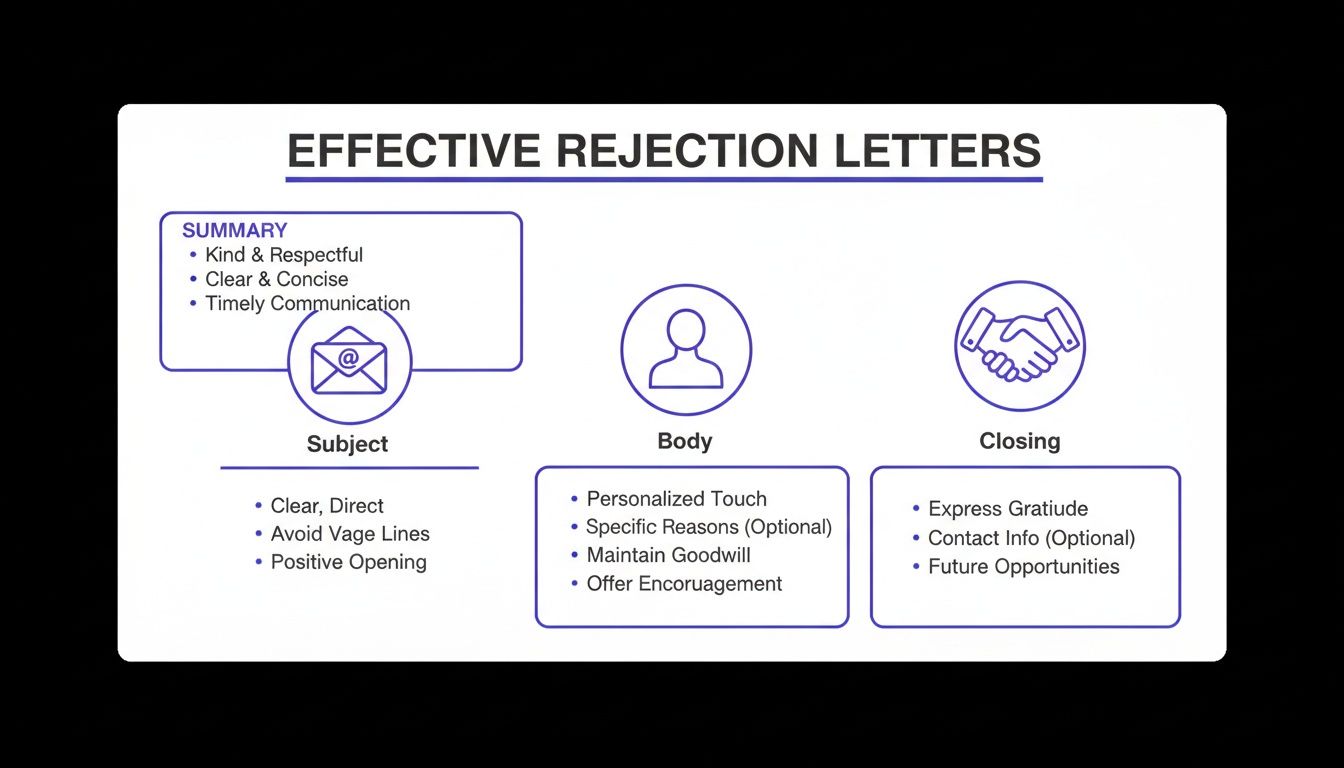
It’s a handy reminder that the subject, body, and closing each play a distinct part in crafting a respectful and clear message.
The Post-Phone Screen Rejection
This is about efficiency and respect. The candidate invested a small amount of time, so your rejection should be prompt and professional. No lengthy explanation is needed.
What Good Looks Like:
Subject: Update on your application for [Job Title] at [Company Name]
Hi [Candidate Name],
Thanks again for taking the time to chat with us about the [Job Title] role. It was great to learn more about your background.
After careful consideration, we've decided to move forward with other candidates whose experience is a closer match for this particular role's requirements [specifically: x, y, z differences]
We genuinely appreciate your interest in [Company Name] and wish you the very best in your job search.
All the best,
[Your Name]
The Final Round Rejection
A final-round candidate has invested serious time and energy. They’ve met multiple team members and maybe completed a task. This rejection demands more warmth and a personal touch.
A quick phone call before sending this email is a great touch, but this template works on its own. If you offer feedback, stick to specifics and keep it objective. For a deeper dive on setting your entire hiring process, check out our hiring playbook template.
What Good Looks Like:
Subject: Following up on your interview for the [Job Title] role
Hi [Candidate Name],
Thank you so much for your time and effort throughout the interview process for the [Job Title] position. We all really enjoyed our conversations with you and were particularly impressed by [mention something specific and genuine, e.g., your thoughtful approach to the case study].
This was a very tough decision, but we have decided to move forward with another candidate at this time.
We are building something special here at [Company Name], and your interest means a lot to us. We will definitely keep your details for future roles that may be a better fit and encourage you to keep an eye on our careers page.
We wish you all the best and have no doubt you'll find a great role soon.
Best regards,
[Your Name]
The Internal Candidate Rejection
This is the most delicate scenario. The goal is to deliver the news with empathy while keeping the employee motivated. This conversation should always happen live first, either in person or over video. The email is a formal follow-up.
This email's purpose is to confirm the decision and offer support. The real work is done in the live conversation. You must provide clear, constructive feedback for their development.
What Good Looks Like:
Subject: Follow up from our conversation
Hi [Candidate Name],
Thanks again for speaking with me earlier. As we discussed, we've decided to move forward with another candidate for the [Job Title] role.
I want to reiterate how much we value your contributions to [Company Name] and your ambition to grow with us. We are fully committed to your development. I've scheduled a follow-up with your manager to discuss a clear plan for gaining the experience needed for this type of role in the future.
We're excited to see you continue to grow here.
Best,
[Your Name]
The Role On Hold Notification
Sometimes, things change. Budgets get frozen or priorities shift. When a role is put on hold, transparency is critical. Don't ghost your candidates. A quick update maintains goodwill and protects your employer brand.
For more inspiration on all types of outreach, you can also check out these recruiting email templates.
What Good Looks Like:
Subject: An update on the [Job Title] role at [Company Name]
Hi [Candidate Name],
I'm writing to give you a quick update on the [Job Title] role you interviewed for. Due to a shift in our internal priorities, we have made the difficult decision to put this role on hold for the time being.
We wanted to be transparent and not keep you waiting. We were very impressed during our conversations and will be in touch immediately if and when the role re-opens.
Thank you again for your time.
Best regards,
[Your Name]
Building A Simple Candidate Feedback Policy
Deciding whether to give feedback to rejected candidates is a common headache for People Leaders. Get it wrong, and you create confusion and risk legal headaches. Let's build a simple, defensible framework you can actually use.
The real tension is a balancing act. You want to be helpful, but you also need to shield the business from risk. Spontaneous, subjective feedback can be twisted into a discrimination claim. A rigid "no feedback, ever" policy feels cold, especially for finalists.
Your feedback policy is a statement about how you treat people. It reflects your company's values and operational maturity. Consistency is your best defence against claims of unfairness.
To Give Feedback Or Not
There isn't a single right answer. A structured approach is your best bet. Most startups find a sweet spot with a tiered policy based on how far a candidate got in the process. This balances candidate experience with risk management.
Here’s a model that works:
Application & Phone Screen Stage: No feedback provided. It’s not scalable at this volume. The interaction is too brief to offer anything meaningful.
Mid-Stage Interviews: No feedback provided. The risk of a comment being misinterpreted is high. The benefit is relatively low.
Final Stage Interviews: Offer brief, verbal feedback only if the candidate asks for it. These candidates have invested serious time. Offering a quick call is a sign of respect.
This tiered approach lets you be human with your finalists while protecting the business from the volume of early-stage rejections.
What A Simple Policy Looks Like
Your internal policy should fit on a single page. It’s a tool for training your hiring team and ensuring everyone delivers a consistent message. Think of it as part of building a strong feedback culture.
Here are the essential bits to document:
Clear Statement of Position: Start with a direct sentence. Something like: "Our policy is not to provide detailed written feedback on interview performance to external candidates."
Tiered Approach Rules: Clearly state what happens at each stage (Application, Phone Screen, Final Round), as outlined above. No grey areas.
Verbal Feedback Guardrails (For Finalists): If you offer verbal feedback, set clear rules. It must always be objective, consolidated, and forward-looking.
Who Delivers the Message: Designate one person as the point of contact. This is almost always the recruiter. This stops hiring managers from going off-script.
Standard Scripting: Give your team a simple, approved sentence to use when a candidate asks for feedback you don't provide. For example: "To ensure our process is fair and consistent for every candidate, our policy is not to share detailed interview feedback."
Putting a simple framework like this in place makes your process predictable, defensible, and fair. It gives your team confidence to handle a tricky part of the rejection process.
Legal Guardrails and Common Mistakes to Avoid
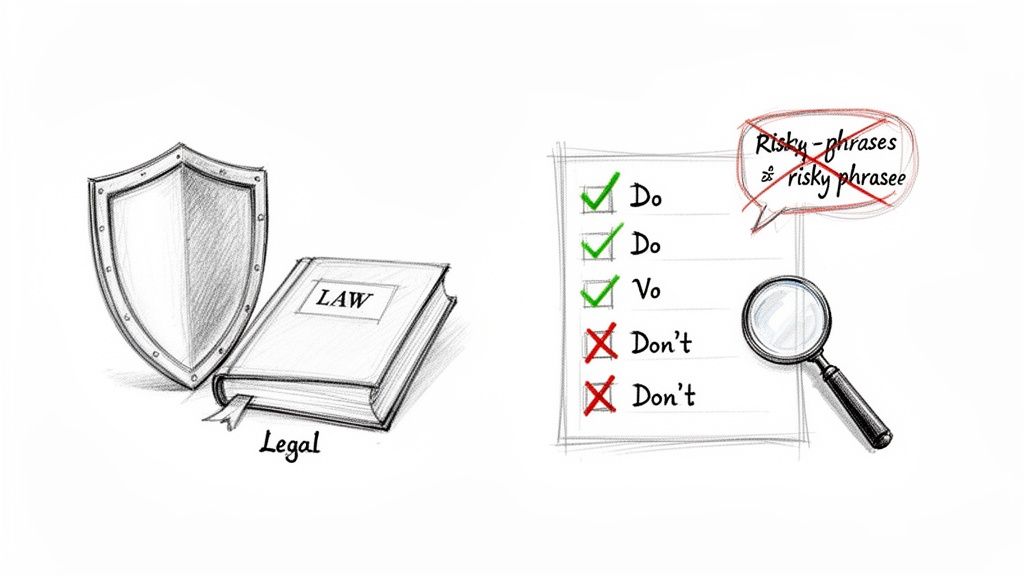
A poorly worded rejection letter can become a legal nightmare. This isn’t meant to scare you into sending robotic emails. It's about putting up simple guardrails so you can operate safely while still being human.
Protecting the business boils down to being deliberate with your language. The two most common traps are making vague promises and giving subjective feedback. Every communication needs to be consistent, fair, and based on objective criteria tied to the role.
The Problem With Vague Promises
It often comes from a good place. You want to soften the blow, so you type, “We’ll definitely keep you in mind for future roles!” The issue is, this can be taken as a promise.
If another role opens up and you don't contact them, they might feel misled. It could even be used to suggest the initial rejection wasn't legitimate.
What to do instead: Only say you’ll keep them in mind if you have a system and intention to do so. A safer, more honest alternative is, "We encourage you to keep an eye on our careers page for future openings that might be a great fit."
This small shift in language is huge. It puts the ownership on the candidate while still being encouraging. You're offering an invitation, not making a commitment you can't keep.
The Danger of Subjective Feedback
Giving detailed feedback is a minefield. Saying things like, “We just didn’t feel you were a good culture fit,” or “You didn’t seem confident enough,” is risky. These are subjective statements that can be perceived as coded, discriminatory language.
This is why a clear, company-wide feedback policy is non-negotiable. To minimise risk, it helps to understand what can lead to formal issues, such as learning how to file a human rights complaint. Your best defence is keeping feedback objective and strictly related to job requirements.
Here are a few common mistakes to sidestep:
Never mention protected characteristics. This seems obvious, but it has to be said. Age, gender, family status, or disability should never be part of the conversation.
Don't compare candidates directly. Avoid saying, "We found someone with more experience." The decision is about this candidate's fit for the role, period.
Avoid overly casual language. Professionalism protects you and the candidate. Keep the tone friendly but structured.
Your goal is simple: be kind and direct without creating legal exposure. By steering clear of vague promises and subjective commentary, your process will be both fair and defensible.
A Few Common Questions, Answered
People Leaders ask us these practical questions every day. Here’s direct advice for handling the tricky parts of saying ‘no’.
How Quickly Should We Send a Rejection Letter?
The sweet spot is 2-5 business days. Any longer feels like you’ve forgotten about them, which damages your company's reputation. Moving quickly shows respect for their time and keeps your hiring process moving.
A fast ‘no’ is always better than a slow ‘maybe’. If you have an unexpected delay, a quick "we're still finalising things" email is better than silence.
Should I Reject a Candidate by Phone or Email?
For early stages like a phone screen, email is fine. It’s efficient and what candidates expect.
For final-round candidates who have invested serious time, a brief, respectful phone call followed by an email is a class act. It's a powerful way to show you valued their effort. For every other stage, a well-written email is perfectly acceptable.
What if a Rejected Candidate Asks for Detailed Feedback?
This is where a clear company feedback policy is a lifesaver. If you have a set approach, you can navigate these requests easily.
If your policy is not to provide detailed feedback, you can state that kindly but firmly.
A great way to phrase it is: “To ensure our process is fair and consistent for every candidate, our policy is not to provide detailed feedback on individual interviews. We do, however, really appreciate the time you spent with us and wish you all the best.”
This response is polite, firm, and legally sound. It closes the conversation gracefully.
Can We Use an Automated System to Send Rejection Letters?
Yes. Using your Applicant Tracking System (ATS) to send rejections is a smart move for high-volume roles. Automation is your friend for consistency, not an excuse for being impersonal.
The key is making sure the templates in your ATS feel human. Use personalisation tokens like [Candidate Name] and [Role Title]. Write the core message with the care and tone we’ve discussed in this guide. You want it to be efficient, not robotic.
Running People Ops in a startup is tough. Open Org gives you the playbooks, templates, and AI-powered tools to do more with less. Get the practical support you need to build a great company at https://www.openorg.fyi.
