





You know 360-degree feedback can unlock performance. But most guides are academic theory. They don't give you tools you can use tomorrow morning. This article is different. It’s built for People Leaders in high-growth companies who need results, not research papers.
We’re skipping the fluff and jumping straight to actionable templates. You will get eight distinct, ready-to-use 360 degree evaluation example frameworks. You can copy, paste, and adapt them for your team. We’re not using outdated corporate models. We focus on what works in a fast-paced environment.
This guide provides a breakdown of each example. It includes specific questions, effective rating scales, and clear interpretation guides. We will analyse what good looks like for competency-based, behavioural, and values-aligned feedback. You'll also get templates for leadership, peer collaboration, and agile sprint-based reviews. To gather this feedback efficiently, exploring various form-building solutions can streamline the process.
The goal is simple. Equip you with the exact tools to run 360s that generate real insights, foster development, and help your people grow. Let's get started.
1. Competency-Based 360-Degree Evaluation Template
This is the foundational 360 degree evaluation example for a reason. It anchors feedback directly to the skills and behaviours your organisation needs to succeed. It evaluates individuals against a pre-defined set of core capabilities. Think leadership, communication, or technical execution. It provides a structured framework for assessing performance from multiple perspectives. This includes managers, peers, direct reports, and the individual themselves.
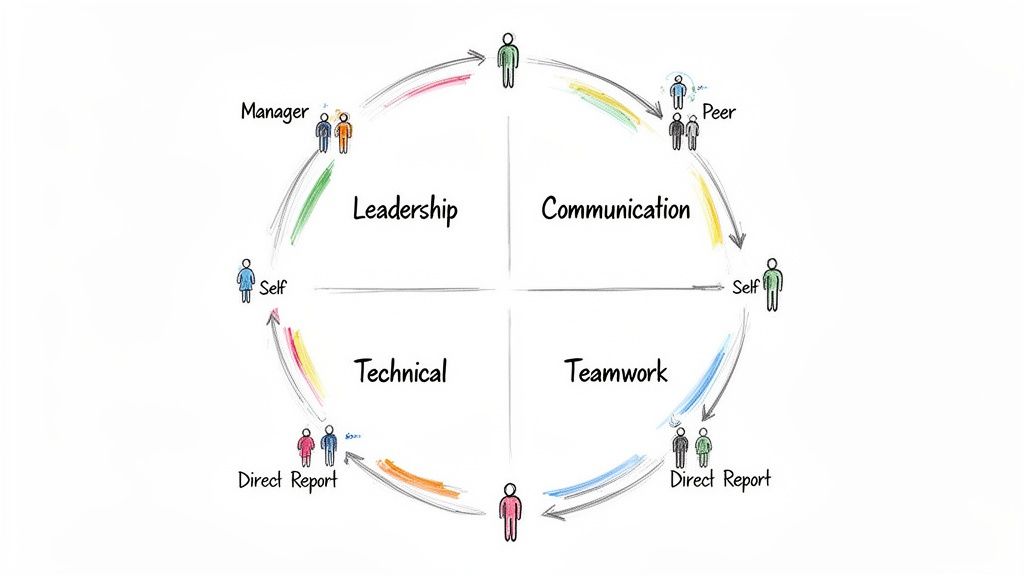
This model is powerful for high-growth companies. A Series A startup can use it to define and embed its desired leadership culture as it onboards its first VPs. A scale-up can use it to align the company on what "good" looks like in a new management structure. It provides a common language for performance and development.
Strategic Breakdown
A competency framework is the operating system for your talent processes. By defining what is valued, you create a clear path for individual growth that supports company goals. The strength of this model is its alignment. When competencies are tied to company values, feedback reflects how well an individual lives those values day-to-day.
What Good Looks Like: A well-designed competency framework translates abstract company values into tangible, observable behaviours. This removes ambiguity from feedback. For instance, a value of "Customer Obsession" can be broken down into competencies like "Actively seeks customer feedback" and "Uses data to understand user needs".
This approach helps standardise feedback across the organisation. It reduces the "rater bias" that can affect unstructured reviews. It ensures every employee is measured against the same clear standards. This creates a fairer and more transparent process for everyone.
Actionable Takeaways
To implement this effectively, follow these steps:
Customise your competencies. Don't copy a generic list. For an early-stage startup, a competency like 'Bias to Action' is more critical than 'Long-Term Strategic Planning'. Align them with your unique company values.
Keep it focused. Start with 4-5 core competencies. Overloading reviewers with 10+ categories leads to survey fatigue and low-quality feedback.
Define behaviours, not traits. Instead of "Proactive," define the behaviour: "Identifies and addresses potential problems before they impact the team." This helps reviewers provide specific examples.
Create a follow-up plan. The feedback is only half the battle. Pair the 360 report with a coaching conversation and a simple development plan. Help the employee turn insights into action.
2. Behavioral Event 360 Feedback Template
This template moves beyond scales to capture the story behind performance. Instead of asking if someone is a "good communicator," it asks raters to describe specific situations where they saw the employee in action. It's a narrative-driven 360 degree evaluation example that uncovers the context and impact of behaviour.
This qualitative method is valuable for startups where trust and influence are paramount. An early-stage SaaS company can use it to evaluate how founding team members handle high-stakes customer calls. A Series B tech firm can use it to assess the readiness of its next generation of leaders. It collects stories about how they navigate ambiguity and motivate their teams.
Strategic Breakdown
Behavioural feedback uncovers emergent patterns and blind spots. It answers the "how" and "why" behind performance. It provides rich, context-specific insights that a 1-5 rating scale cannot capture. It’s about collecting critical incidents, both positive and developmental, that illustrate an individual's impact.
The power of this model is its focus on observable actions. This shifts the conversation from subjective judgments to concrete examples. It makes feedback feel more objective and less personal. It’s an essential tool for building a high-trust environment where direct, specific feedback is the norm. Find out more about building a feedback culture in our practical playbook.
What Good Looks Like: Narrative feedback reveals what people actually do under pressure, not just what they think they should do. A story about a leader who calmed a tense client meeting provides more valuable data than a high score in "Communication".
This method is especially effective for senior leadership reviews. Nuanced interpersonal dynamics and influencing skills are critical at that level. It helps uncover the subtle behaviours that create or destroy psychological safety.
Actionable Takeaways
To implement this effectively, follow these steps:
Use clear, open-ended prompts. Don't just ask for "feedback." Guide reviewers with prompts like: "Describe a time when [Name] successfully influenced a key decision" or "Share an example of a situation where [Name] could have been more effective".
Request balanced examples. To get a complete picture, explicitly ask each reviewer for one example of a key strength and one example of a developmental opportunity.
Designate a neutral facilitator. Raw narrative feedback needs to be synthesised into themes. Assign an objective internal HR partner or an external coach to process the comments and present a summary report. This protects rater confidentiality.
Focus on development, not rating. The output isn't a score. Use the report as the foundation for a rich development conversation. Co-create a plan with the employee to amplify strengths and address blind spots.
3. Values-Aligned 360 Evaluation Template
This 360 degree evaluation example shifts the focus from skills to culture. It measures how well an individual embodies the company’s core values. It's a powerful tool for startups and scale-ups that want to build and protect a strong culture as they grow. The feedback loop centres on behaviours that reflect values like 'customer obsession' or 'bias to action'.
This model is critical for companies where culture is a competitive advantage. A mission-driven tech company can use it to ensure its hiring and development processes reinforce its core beliefs as it scales. It helps codify the "unwritten rules" of how people are expected to operate. This makes culture tangible and measurable.
Strategic Breakdown
A values-aligned evaluation turns your mission statement into a practical performance tool. It connects an individual's daily actions to the organisation's foundational principles. This approach is less about what an employee achieves and more about how they achieve it. This ensures results are not delivered at the expense of culture.
What Good Looks Like: Values-based feedback provides a clear cultural compass for decision-making. When a value like 'Transparency' is evaluated, you're assessing behaviours like "Shares information openly, even when it's difficult" and "Proactively communicates project status changes to stakeholders".
This method acts as a cultural immune system. It helps identify and address behaviours misaligned with the company's ethos. It ensures that as the team grows, the cultural DNA remains strong. For leaders at companies like Zappos or Patagonia, this has been fundamental to maintaining their brand identity.
Actionable Takeaways
To implement this effectively, follow these steps:
Co-create your values. If you haven't defined them, involve your team. This builds buy-in and ensures the values are authentic.
Define observable behaviours. For each value, list 3-4 specific actions. For a value like 'Move Fast', a behaviour could be "Prioritises shipping a minimum viable product over perfecting a solution".
Use it in onboarding. Introduce the values-aligned framework to new hires in their first 90 days. This sets clear cultural expectations from the start.
Connect feedback to recognition. Publicly celebrate team members who receive strong values-based feedback. This reinforces what "good" looks like and makes your values feel alive.
4. Leadership Effectiveness 360 Template (Manager-Focused)
This 360 degree evaluation example is tailored for managers. It moves beyond general competencies to focus on behaviours required to lead teams effectively. It assesses leaders on dimensions like strategic vision, decision-making, and employee development. The template gathers feedback from direct reports, peers, and senior leaders for a holistic view of a manager's impact.
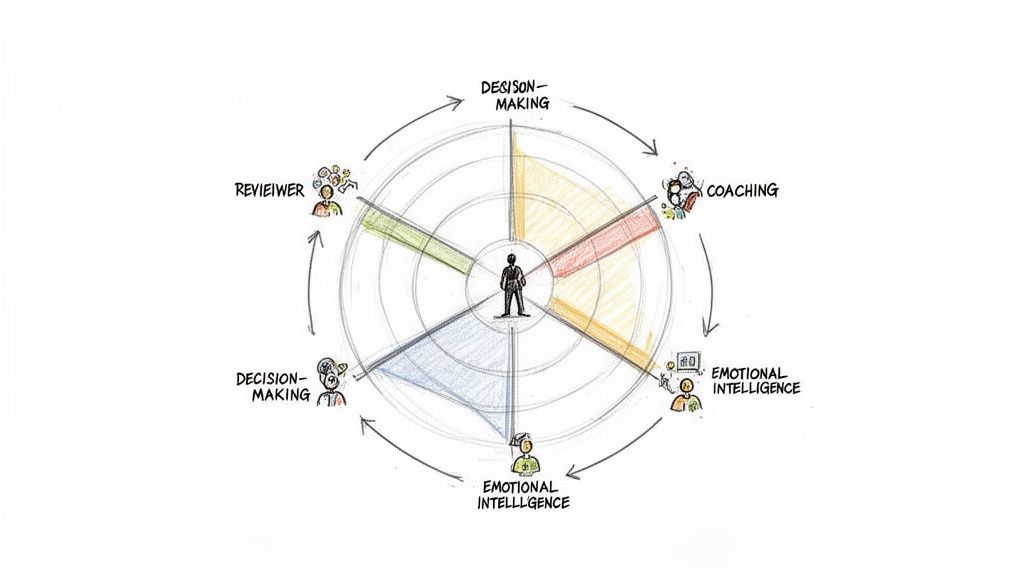
This tool is critical for startups promoting their first wave of managers. Companies like Stripe use this approach to develop first-time managers during rapid growth. It ensures they have the support and feedback needed to succeed. Remote-first companies like GitLab rely on distributed feedback loops to assess leadership effectiveness without in-person observation. It's a mechanism to scale good leadership.
Strategic Breakdown
For a growing company, manager quality is the single biggest lever for retention and performance. This template is a diagnostic tool. It identifies specific strengths and development areas before they become team-wide problems. It separates the what (results) from the how (behaviours). This gives leaders a clear picture of their influence on team culture and motivation. The feedback helps new managers build self-awareness.
What Good Looks Like: The most valuable feedback for a manager often comes from their direct reports. Anonymising these responses is non-negotiable. It creates psychological safety, encouraging the honest, specific feedback needed for real growth.
Positioning this exercise purely as a developmental tool is essential. When it is disconnected from performance reviews and compensation, participants are more open to acting on constructive feedback. This creates a culture where feedback is a gift for growth, not a weapon for judgement.
Actionable Takeaways
To make this template work for your managers, follow these steps:
Position it for development. Explicitly state that this process is confidential. It will not impact performance ratings or pay. This is about growth.
Anonymise direct report feedback. Pool responses from direct reports to protect individuals. A minimum of three direct reports is a good rule of thumb before sharing themed feedback.
Provide facilitated debriefs. Don't just email a manager their report. Pair them with an external coach or a trained internal facilitator. They help interpret the results and create a development plan. This is a key part of how cohort-based learning can build stronger leaders.
Focus on the "vital few". Help the manager identify 2-3 key development areas. Trying to fix everything at once leads to inaction.
Schedule a follow-up. Check in at the 6-month mark to review progress against their development goals. This accountability loop ensures feedback leads to lasting change.
5. Peer Collaboration & Teamwork 360 Template
This 360 degree evaluation example strips away hierarchical feedback to focus on horizontal collaboration. It’s a lightweight template designed to assess how well team members work together. It evaluates communication across functions and contribution to a positive team dynamic. It gathers insights from those working alongside the individual every day.
This approach is perfect for flat, fast-moving startups. Cross-functional teamwork is the default mode of operation. Companies like Atlassian and HubSpot use peer feedback loops to evaluate how effectively their 'Culture Code' is being lived out. It’s an ideal tool for assessing individual contributors without direct reports but who have a significant impact on team success.
Strategic Breakdown
In a high-growth environment, bottlenecks are often caused by poor cross-functional communication, not a lack of skill. A peer-focused review system makes these collaboration gaps visible. It surfaces the unsung heroes who unblock others. It also identifies friction points that managers might not see. This model reinforces that success is defined by positive impact on the team's collective output.
What Good Looks Like: Peer feedback directly measures an employee's "organisational citizenship." It evaluates behaviours that don't always show up in performance metrics but are critical for a healthy culture. Things like offering help without being asked or proactively sharing information with other teams.
By focusing on teamwork, you shift the cultural emphasis from individual achievement to collective success. This is crucial for scaling organisations that need to break down silos before they form. The feedback reflects how well an employee contributes to the collaborative fabric of the company.
Actionable Takeaways
To implement this effectively, follow these steps:
Keep it lightweight. Aim for a maximum of five questions to ensure high completion rates. Busy teams provide better feedback when the process is quick.
Mix quantitative and qualitative. Use a simple rating scale for questions like "How reliable is this person as a collaborator?". Follow up with an open-ended question like "What is one thing this person could do to improve their collaboration with you?".
Increase the frequency. Collect peer feedback quarterly, not annually. This keeps the insights relevant and allows for rapid course correction.
Amplify positive feedback. Use the results to identify natural mentors and team players. Reinforce great collaboration by giving public recognition in a company all-hands or a dedicated Slack channel.
Use it as a supplement. Peer feedback is powerful, but it should be combined with manager feedback to provide a complete performance picture.
6. Customer & Stakeholder 360 Template (External Feedback Loop)
This 360 degree evaluation example moves beyond internal feedback. It captures the crucial external perspective. It extends the process to include insights from key external stakeholders like customers, clients, or partners. For roles where external relationship management drives business results, this template provides a clear view of an individual's impact.
This model is essential for leaders whose success is tied to market perception. A B2B SaaS sales leader can get direct feedback from key accounts on their partnership style. A founder can gather structured feedback from investors on their vision and execution. It closes the gap between internal assumptions and external reality.
Strategic Breakdown
Integrating external feedback connects individual performance directly to business outcomes like customer retention and partner engagement. It provides a vital reality check. It ensures that internally perceived strengths translate into positive external impact. The power of this model is its ability to highlight blind spots that internal-only reviews miss.
What Good Looks Like: External feedback transforms performance management from an internal HR process into a strategic business tool. It answers the critical question: "Are our key people building the external relationships we need to win?". This is vital for roles where the individual is the company to outside stakeholders.
This approach provides high-stakes, high-impact data. For a customer success leader, feedback from their top three accounts is more valuable than a dozen internal peer reviews. It surfaces the specific behaviours that strengthen or weaken critical business relationships.
Actionable Takeaways
To implement this effectively, follow these steps:
Be highly selective. Use this for critical, outward-facing roles only. Start with 2-3 key external stakeholders per person to ensure high-quality feedback.
Frame it as partnership feedback. Position the request to externals as an effort to strengthen the partnership, not as a performance review. This encourages honest input.
Guarantee confidentiality. Be explicit with external reviewers about how their feedback will be used and anonymised. Let your employee know the themes will be discussed, but direct attribution will be confidential.
Use a neutral facilitator. For sensitive roles like founders, consider having a neutral third party conduct the interviews. This ensures candour and psychological safety for everyone.
7. Self-Assessment + 360 Gap Analysis Template
This template turns a 360 review into a tool for building self-awareness. It directly compares an individual's self-perception with how they are perceived by others. The core of this 360 degree evaluation example is the "gap" between these two data sets. This highlights potential blind spots or unrecognised strengths.
This approach is effective in leadership development for high-potential employees in scaling companies. An engineer transitioning into management might rate themselves highly on "technical guidance" but receive lower scores from their new direct reports. This gap is not a failure. It’s an actionable insight that pinpoints where their coaching efforts should be focused.
Strategic Breakdown
The gap analysis model shows the difference between our intent and our impact. First, ask an employee to complete a self-assessment. This gives them a stake in the process and primes them for reflection. When they later see aggregated feedback from others, they are more prepared to engage with the data without becoming defensive.
What Good Looks Like: The power of this model is in reframing feedback as data. A gap isn't a criticism; it's a delta between two data points. This objective framing helps individuals explore the 'why' behind the gap with curiosity rather than fear.
This method transforms the feedback process into a collaborative exploration. To derive actionable insights from the feedback, understanding how to analyze survey data effectively is key. It helps both the employee and their manager to see patterns and focus development on the areas that will make the biggest difference.
Actionable Takeaways
To implement this effectively, follow these steps:
Start with self-assessment first. Always have the individual complete their review before seeing any other feedback. This anchors the process in their perspective.
Focus on the biggest gaps. Don't try to address every difference. Identify the 2-3 competencies with the largest deviation between self and other ratings to create a focused plan.
Use curious questions in the debrief. Coach managers to ask questions like, "What do you think might be causing the difference in perception here?" or "Your peers rated you higher than you rated yourself. What do you make of that?".
Schedule a dedicated debrief. The coaching conversation is critical. Book a 1:1 within a week of the employee receiving their report. Discuss the findings and start building a development plan, which you can manage within a broader performance handbook.
8. Agile/Sprint-Based Micro 360 Feedback Template
For fast-moving startups, the annual review is dead. This lightweight, frequent 360 degree evaluation example is for teams that operate in sprints or rapid cycles. It replaces the heavy performance review with quick, relevant feedback gathered every two to four weeks. It focuses on current sprint contributions, collaboration, and immediate impact. It is a system built for velocity.
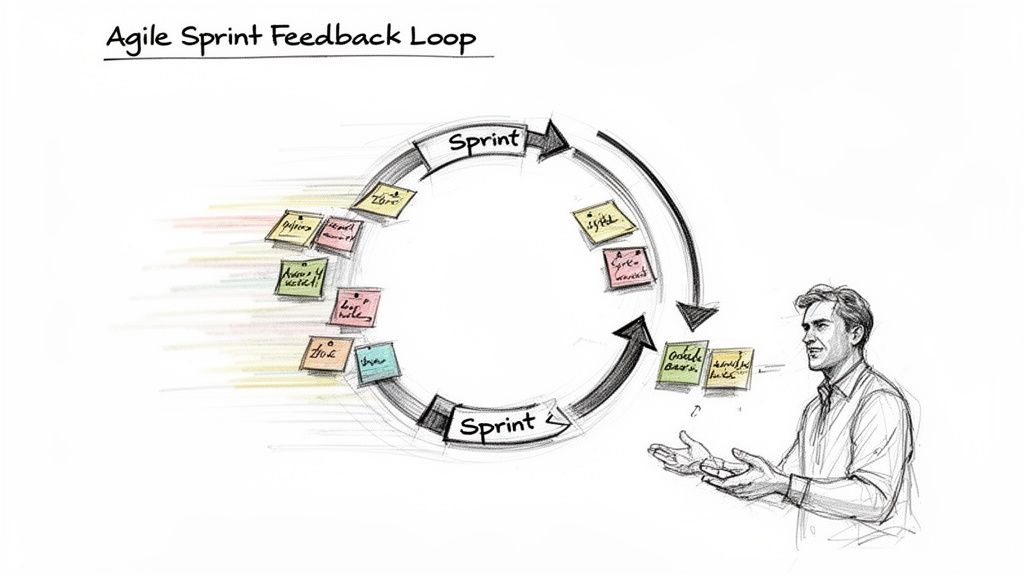
This model thrives in engineering-heavy cultures like those at Figma or Canva. Work is organised around short, iterative cycles. It is also perfect for remote-first companies like GitLab that rely on continuous, asynchronous communication. The goal is to make feedback a low-friction, high-frequency habit that fuels performance in real-time.
Strategic Breakdown
The core principle here is immediacy. Feedback delivered months after a project is completed has almost no value. By tying feedback directly to a sprint, you ensure it is specific, timely, and directly related to the work just done. This creates a tight loop between action and insight. It accelerates individual learning and team performance.
What Good Looks Like: This model transforms feedback from a performance judgement into a performance accelerant. It's less about a formal rating and more about continuous calibration. It helps teams quickly unblock issues and double down on what is working in the next sprint.
For People leaders, this approach provides a real-time pulse on team health. Instead of waiting for an annual survey to discover a team is struggling, you see trends emerge in the weekly feedback. This allows for proactive coaching before small frictions become major roadblocks.
Actionable Takeaways
To make this micro-feedback model work, you need to ruthlessly prioritise simplicity:
Keep it simple. Limit the feedback request to two questions max. For example, "What is one thing [Name] did this sprint that helped the team succeed?" and "What is one thing they could do differently next sprint to have an even greater impact?".
Tie it to your rhythm. Trigger the feedback request automatically at the end of every sprint. The consistency builds a powerful habit.
Train managers on synthesis. The manager’s role shifts from "reviewer" to "coach." Teach them how to spot themes in the weekly feedback. They can use them to guide a brief, forward-looking coaching conversation.
Celebrate it publicly. Create a Slack channel like #feedback-highlights to share positive comments. This reinforces the value of giving and receiving feedback.
Making 360 Feedback an Asset, Not an Event
Moving from theory to execution is where most 360-degree feedback initiatives fail. You now have a range of powerful, role-specific templates. From the Competency-Based model that anchors feedback in clear skills, to the Agile Micro-Feedback loop designed for rapid engineering cycles, the common thread is context. The best 360 degree evaluation example is one tailored to a specific team's reality, not a generic corporate import.
The goal is not simply to run a survey. It is to build a high-trust system where candid, constructive feedback becomes a natural part of how your team operates. This process creates a powerful engine for individual and organisational growth. It highlights blind spots for your senior leaders and gives a voice to your quietest contributors.
Your Action Plan: Putting This into Practice
Reading about a 360 degree evaluation example is one thing. Implementing it is another. Here is how to get started.
Start with a Pilot. Don’t roll out a company-wide 360 process from day one. Choose a single, high-trust team as your test case. Your engineering team might be perfect for the Agile/Sprint-Based template. Your newly promoted managers are great candidates for the Leadership Effectiveness model.
Define the 'Why' and Communicate It. Before sending a single survey, be crystal clear on the objective. Is this to help managers become better coaches? Is it to improve cross-functional collaboration? Communicate this purpose repeatedly to build buy-in.
Train Your Raters and Receivers. Giving and receiving feedback are skills. Host a brief workshop on how to provide constructive, specific, and kind feedback. More importantly, train managers on how to interpret reports and facilitate a productive development conversation.
Commit to Follow-Up. The worst thing you can do is gather all this data and let it sit in a folder. The process only has value if it leads to action. Ensure every participant has a follow-up conversation with their manager to create a simple development plan. This closes the loop and signals that the organisation is serious about growth.
Ultimately, a well-executed 360-degree feedback system transforms your culture from one of passive assumption to one of active learning. It replaces guesswork with data, helping your best people get even better. By choosing the right model and committing to a thoughtful process, you are not just implementing another HR initiative. You are building a foundational piece of a high-performing organisation.
Ready to build this and other core People Ops systems without reinventing the wheel? The Open Org Content Pass gives you instant access to our full library of playbooks, templates, and frameworks used by top startups. Stop guessing and start executing with practical, battle-tested resources.
